
Sewer Line Maintenance Tips Every Cerritos Homeowner Should Know
Most sewer emergencies are preventable. These maintenance habits — what goes down the drain, how you manage roots, and when to inspect — keep older Cerritos laterals flowing.
In short: Sewer lines fail quietly and expensively. Unlike a leaky faucet, a lateral gives few warnings before a backup, and by the time sewage is coming up the shower drain, the options are emergency service and a repair bill nobody budgeted for. The frustrating part is that most of those emergencies were preventable — not with
Sewer lines fail quietly and expensively. Unlike a leaky faucet, a lateral gives few warnings before a backup, and by the time sewage is coming up the shower drain, the options are emergency service and a repair bill nobody budgeted for. The frustrating part is that most of those emergencies were preventable — not with expensive equipment, but with habits that cost little and take minutes.
Cerritos homes have specific maintenance needs: clay tile and cast-iron laterals now fifty or more years old, aggressive tree roots in nearly every neighborhood, slab foundations that hide the pipe's first stretch, and winter atmospheric-river storms that saturate LA basin soils and stress every joint. The tips below are organized around those realities — what to keep out of the line, how to stay ahead of roots, how to prepare for storm season, and when a camera inspection is worth scheduling before trouble starts.
Know where your cleanout is and keep it accessible
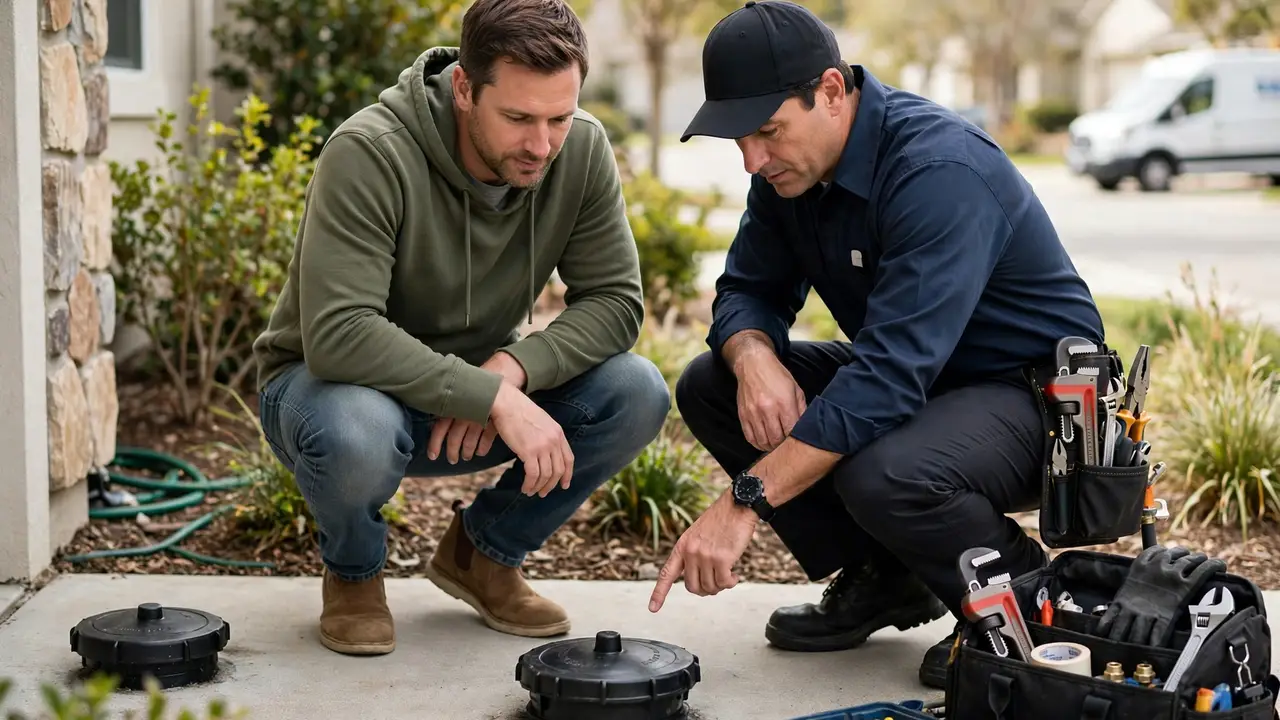
The cleanout is your sewer line's front door: the capped pipe, usually three or four inches across, that gives a technician direct access to the lateral without pulling a toilet. In an emergency, an accessible cleanout is the difference between a quick cable job and a longer, more disruptive visit. Yet in many Cerritos tracts, the cleanout is buried under an inch of soil, hidden behind a bush planted in the nineties, or paved over by a walkway addition nobody thought twice about.
Find yours before you need it. Look around the front of the property, along the garage wall, or just beyond the foundation for a round cap at or near grade. If you cannot find one, a plumber can locate it with a transmitter during a routine visit — and if your home genuinely has no cleanout, consider having one installed at the building exit. It is a modest one-time addition that makes every future cleaning, jetting, and inspection faster and less invasive, and it gives emergency crews the access point they need during a middle-of-the-night backup.
Keep grease, wipes, and the wrong paper out of the line
Grease is the number one enemy of a residential sewer line, and it does its damage invisibly. Liquid cooking oil poured down the sink cools and congeals inside the pipe, layering the walls with a waxy coating that narrows the opening and catches everything else. In Cerritos' older cast-iron laterals, whose interiors are already roughened by decades of scale, grease builds up faster than in smooth modern pipe. Wipe pans with a paper towel before washing, collect used oil in a container for disposal, and run hot water with dish soap after greasy dishwashing — small habits that add years to a line's clear-flowing life.
Wipes are the second habit to break. Products labeled flushable do not break down fast enough for fifty-year-old clay and cast-iron laterals with rough interiors and joint lips; they snag, accumulate, and form the core of blockages that hydro jetting then has to blast apart. The same goes for paper towels, facial tissues, and hygiene products — the only paper that belongs in the toilet is toilet paper. Households that make this one change see noticeably fewer slow-drain episodes within months.
Manage tree roots before they manage your pipe
In Cerritos, the question is rarely whether roots will find your lateral but when. Ficus, eucalyptus, sycamore, and mature citrus all send aggressive root systems toward the moisture and nutrients inside clay tile joints, and a single tree within twenty or thirty feet of the lateral's path is a candidate for intrusion. You do not need to remove every tree — but you do need a root strategy, because roots that enter through a joint never stop growing on their own.
The strategy has three parts. First, know where your lateral runs — a locating service or a camera inspection with surface marking maps it — and think twice before planting thirsty species along that path. Second, if a line has a history of root blockages, put it on a maintenance rhythm: professional cleaning on a set interval, with camera checks every couple of cycles to watch whether the joints are worsening. Third, for joints that clog repeatedly, discuss sealing options with your technician — because a joint that needs cutting every year is a joint asking for a permanent fix, not another temporary clearing.
Prepare for storm season before the clouds arrive
Cerritos' sewer troubles cluster around the winter storm season, and the connection is physical, not coincidental. Atmospheric-river storms saturate LA basin soils, and saturated soil does three things: it swells and shifts pipe sections at their joints, it drives tree roots to grow aggressively toward the waterlogged line, and it raises groundwater that infiltrates through every crack — adding flow the line was not designed to carry. A lateral that handled summer fine can become a backup source by February.
Late fall is the time to act. Walk the yard and note any new soggy spots or sinkholes along the lateral's path, which can signal a developing break. Make sure area drains and gutters discharge away from the foundation rather than ponding over the sewer route. If your line has any history of trouble, schedule the camera inspection in fall, not after the first storm backup — finding a root mat or a belly in October means a planned cleaning visit instead of an emergency call in January. And know where your main water shutoff is, since a severe backup sometimes calls for stopping all water use until help arrives.
Schedule camera checks on a sensible cycle
One maintenance habit stands out for preventing surprises on an older lateral: periodic camera inspection — not because the camera fixes anything, but because it converts surprises into plans. A line with light scale and two rooty joints is a maintenance line: clean it on an interval and monitor. A line with a growing belly or a newly offset joint is a line heading toward a repair, and knowing that a year early lets you plan the work on your schedule instead of the pipe's.
For clay tile or cast-iron laterals over forty years old, an inspection every few years is a reasonable cadence; after any backup, after buying a home, or before a major landscaping project that crosses the lateral's path, inspect regardless of schedule. Keep the footage from each visit — comparing this year's recording to the last one is how both you and your technician tell whether a condition is stable or deteriorating. Call (833) 713-2101 to put your line on a checkup cycle, and treat the resulting plan the way you treat an HVAC tune-up: routine care that keeps the emergency visit from ever happening.
Frequently Asked Questions
What is the one thing I should never put down the drain?
Grease. It causes more residential sewer blockages than anything else, it builds up invisibly inside the pipe, and no drain cleaner dissolves it reliably once it congeals. Wipe it, container it, trash it — never drain it.
How do I know if tree roots are in my sewer line?
The classic signs are backups that recur at the same fixtures, gurgling drains, and blockages that return within months of a cleaning. A camera inspection confirms it visually — roots are unmistakable on screen — and shows exactly which joints they entered through.
Should I use chemical drain cleaners for maintenance?
No. Caustic cleaners rarely clear a real sewer blockage, they can damage older pipes with repeated use, and they create a hazard for the technician who eventually works on the line. Mechanical cleaning or jetting, verified by camera, is the safe alternative.
Does my sewer line need maintenance if I have never had a backup?
If your lateral is clay or cast iron and over forty years old, yes — preventive inspection is worthwhile even without symptoms, because the first symptom of a deteriorating line is often the backup itself. Newer PVC lines with no trees nearby need far less attention.
What should I do before a big storm if my line has had problems?
Reduce water use during the heaviest rain, make sure gutters and area drains direct water away from the sewer route, and avoid laundry marathons while the ground is saturated. If backups have coincided with storms before, tell your technician — storm-linked patterns point to infiltration worth addressing.
Related reading
Sewer Line Repair vs Replacement: How Cerritos Owners Decide
Repair or replace? How to decide.
Learn moreSewer Maintenance Plans Explained for Cerritos Homeowners
Are maintenance plans worth it?
Learn moreSewer Pipe Materials: A Complete Guide for Cerritos Homes
Every pipe material, compared.
Learn moreSewer Line Problems Don’t Wait. Neither Should You.
Call now and reach a local sewer line specialist serving Cerritos, CA and nearby northwest suburbs — 24/7.
(833) 713-2101Free to call · No obligation · 24/7 emergency line