
Sewer Maintenance Plans, Explained
A sewer maintenance plan schedules inspections and cleanings before problems start. Here is what Cerritos plans typically include, what they leave out, and how to compare them.
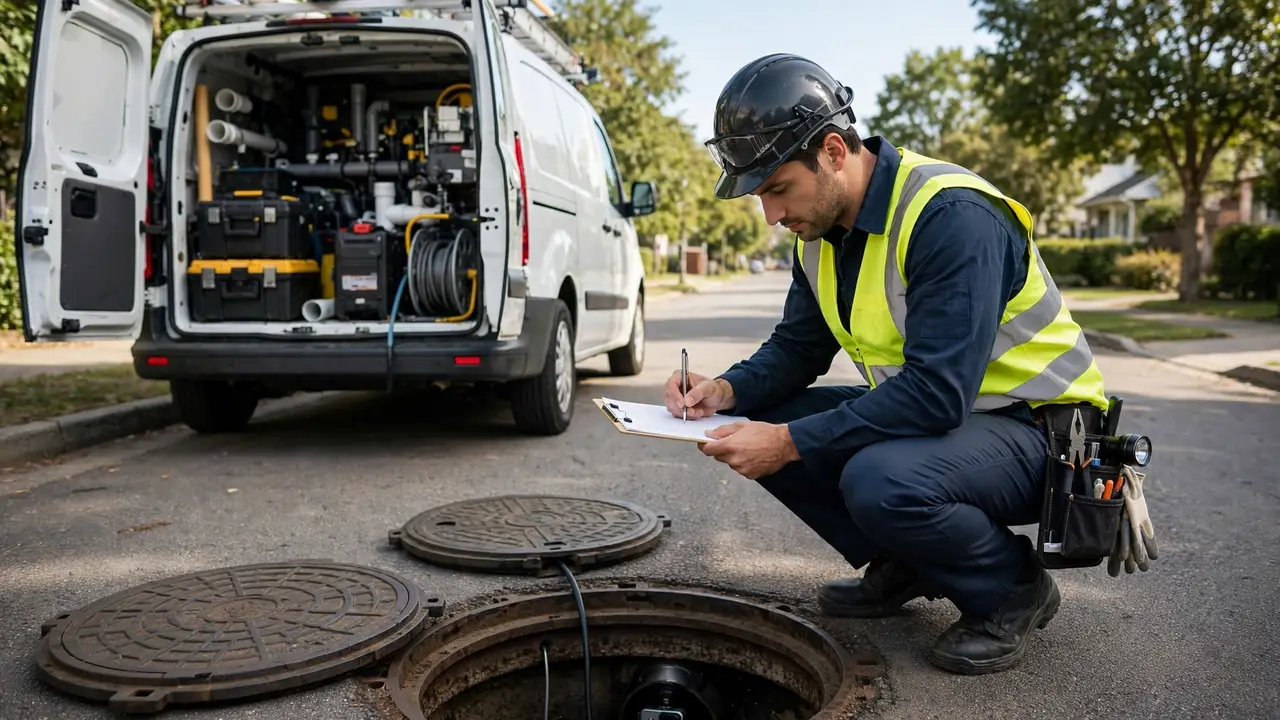
In short: A sewer maintenance plan is a scheduled service agreement for your sewer lateral — the underground pipe that carries wastewater from your home to the city main. Instead of waiting for a slow drain or a backup to force the issue, the plan spreads preventive care across the year: a camera inspection to check the
A sewer maintenance plan is a scheduled service agreement for your sewer lateral — the underground pipe that carries wastewater from your home to the city main. Instead of waiting for a slow drain or a backup to force the issue, the plan spreads preventive care across the year: a camera inspection to check the pipe's condition, a cleaning or root treatment to keep it flowing, and a written report so you know exactly where things stand. In Cerritos, where many homes were built in the 1960s and 70s on slab foundations and mature street trees line the parkways, that kind of routine attention catches small problems while they are still inexpensive to address.
Not all plans are built the same, so it pays to know what the industry standard looks like before you compare offers. This guide explains what a sewer maintenance plan typically includes, what it usually leaves out, how often service visits should happen, and the questions that separate a useful plan from an empty promise. If your lateral has never been inspected, a standalone camera inspection is a sensible first step — it gives you baseline footage that any honest plan should be built on.
What a maintenance plan usually includes
Most plans center on two services: inspection and cleaning. The inspection is a camera run through the lateral, recorded so you can see cracks, offsets, root intrusion, and grease buildup for yourself. The cleaning is usually hydro jetting or mechanical cabling, which scours the pipe interior back to full diameter. Together they answer the two questions that matter: what condition is the pipe in, and is anything blocking it right now?
Beyond the core visit, plans commonly add practical extras. Many include a written condition report with the footage, priority scheduling when something goes wrong between visits, and reminders when the next service is due. Some plans bundle a root treatment — a foaming herbicide applied after cutting — that slows regrowth in lines that battle ficus or eucalyptus roots every year. If tree roots are your recurring headache, ask whether root control is part of the plan or billed separately, and read how professional root removal differs from a quick cable run.
What plans usually leave out
A maintenance plan is preventive care, not insurance, and the exclusions matter as much as the inclusions. Excavation, pipe replacement, and trenchless rehabilitation are repair work — they are diagnosed during plan visits but performed and billed as separate projects. Damage caused by construction, heavy equipment, or a collapsed section that was already failing also falls outside routine maintenance. A reputable provider states these boundaries up front, in writing, before you sign anything.
Plans also stop at your property line in most cases. The lateral from your house to the connection point is yours; the city main in the street belongs to the municipality. If a camera inspection shows the problem is in the public main, that is a call to the city, not a plan visit. Knowing where your responsibility ends keeps expectations realistic and prevents surprise invoices.
How often should a lateral be serviced
There is no single schedule that fits every home — the right interval depends on pipe material, age, and what the camera shows. A newer PVC lateral with no root pressure may only need a look every couple of years. An older clay or Orangeburg line under mature trees is a different story: annual cleaning and inspection is common, because roots can re-enter joints within a single growing season and scale builds up steadily on rough interiors.
Southern California's weather adds its own rhythm. Atmospheric-river storms can drive groundwater and fine silt into compromised laterals, so a check before the rainy season is smart preventive timing for older lines. The honest answer is that your first inspection sets the schedule — a clean bill of health stretches the interval, while root intrusion or heavy grease shortens it. Be wary of any plan that prescribes the same frequency for every house on the block without ever running a camera.
Who benefits most in Cerritos
Maintenance plans are especially worthwhile for homes with known risk factors, and Cerritos has plenty of them. The 1960s and 70s tracts that define much of the city were plumbed with materials now reaching the end of their expected service life — clay tile, cast iron, and in some neighborhoods Orangeburg fiber pipe. Slab foundations, standard across these tracts, make under-slab leaks disruptive to reach, which raises the value of catching problems in the yard lateral before they migrate under the house.
Big trees are the other major factor. Ficus, eucalyptus, and camphor trees planted decades ago now have root systems that can travel surprising distances toward the moisture in a sewer joint. Rental properties benefit too: a plan gives owners documented proof of maintenance between tenants and reduces the odds of a late-night backup call. If any of this describes your property, periodic sewer line cleaning on a plan is far calmer than emergency service after a backup.
How to compare plans before signing
Start with the visit checklist: exactly which services are performed at each visit, and is the camera inspection included every time or only on the first? Ask whether you receive the recorded footage and a written report — documentation is what turns a service visit into a maintenance record you can use when selling the home or filing an insurance claim. Vague promises of a thorough checkup without specifics are a warning sign.
Then look at the business terms. Can you cancel, and does unused service transfer if you sell the house? Are findings presented without pressure, or does every visit end with an urgent upsell? A plan should reduce your long-term risk, not lock you into a sales funnel. The right provider treats the plan as a partnership: they show you the footage, explain what it means in plain language, and let the pipe's actual condition set the agenda. Questions? Call (833) 713-2101 and ask what a first inspection would show at your address.
Frequently Asked Questions
Does a sewer maintenance plan cover pipe replacement?
No. Maintenance plans cover preventive services — inspections, cleanings, and root treatments. If a visit reveals a collapsed section or a pipe that needs rehabilitation, that repair is scoped and quoted as a separate project. Think of the plan as the early-warning system that finds the problem while your options are still open.
How often will a technician actually visit?
It depends on your pipe. Lines with active root intrusion or heavy grease are often serviced annually; newer, root-free lines may go two years between visits. Your first camera inspection should set the interval — any plan that assigns the same schedule to every home without looking at the pipe deserves skepticism.
Do I get to keep the camera footage?
You should. Recorded footage and a written condition report are the most valuable parts of a maintenance visit — they document your pipe's condition over time and support insurance claims or a future home sale. Confirm in writing that footage is included before you sign.
Will a plan guarantee I never get a backup?
No plan can promise that. Maintenance dramatically lowers the risk by removing buildup and catching defects early, but backups can still come from misuse — grease poured down drains, wipes flushed, or a sudden failure in a pipe that was already marginal. What a plan does ensure is that you will not be blindsided: you will know your pipe's condition.
What happens to the plan if I sell my house?
Terms vary. Some plans transfer to the new owner, which can be a selling point; others cancel with a final visit. Ask about transfer and cancellation terms up front, and get them in writing rather than relying on a verbal promise.
Related reading
Sewer Line Problems Don’t Wait. Neither Should You.
Call now and reach a local sewer line specialist serving Cerritos, CA and nearby northwest suburbs — 24/7.
(833) 713-2101Free to call · No obligation · 24/7 emergency line