
Sewer Line Easements, Explained in Plain Language
A sewer easement gives a utility the legal right to access part of your property. Here is what easements mean for repairs, fences, trees, and who fixes what in Cerritos.
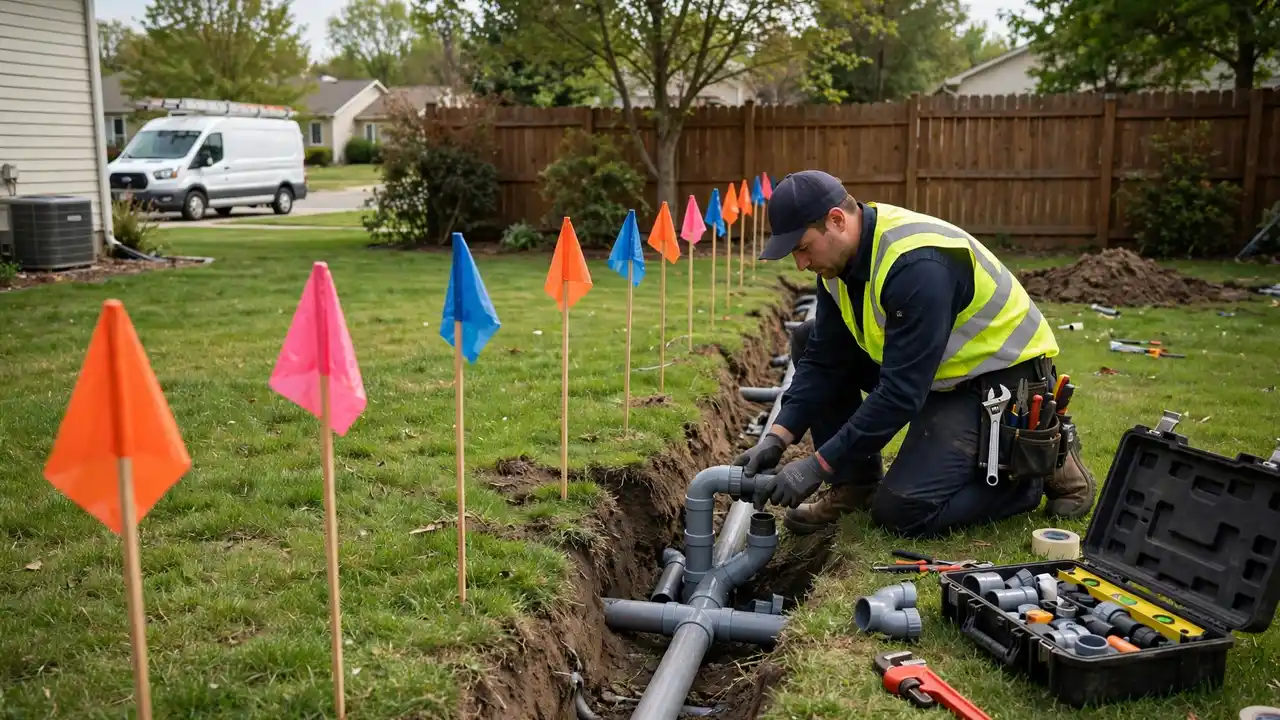
In short: Somewhere in your property's paperwork — in the title report from when you bought the house, or on the subdivision map filed decades ago — there may be a sewer easement: a legal right allowing a utility or the city to access a strip of your land for a sewer line. Most homeowners never think
Somewhere in your property's paperwork — in the title report from when you bought the house, or on the subdivision map filed decades ago — there may be a sewer easement: a legal right allowing a utility or the city to access a strip of your land for a sewer line. Most homeowners never think about it until a repair crew needs to dig near the fence line, or a neighbor's contractor asks to cross the backyard, or a planned patio turns out to sit directly over a buried main.
Easements matter because they shape what you can build, who can dig, and who pays when something breaks. In Cerritos, where 1950s through 1970s tracts were platted with shared utility corridors and rear-yard sewer mains are common, easement questions come up in nearly every major sewer line repair or replacement project. This guide explains what an easement is, where they appear in Cerritos neighborhoods, how they divide maintenance responsibility, and what to check before you build or buy.
What a sewer easement is
An easement is a recorded legal right to use someone else's land for a specific purpose, and it stays with the property — not the owner — when the house is sold. A sewer easement typically grants a utility or municipality the right to install, access, maintain, and repair a sewer line crossing the property, usually within a defined strip of land measured in feet from the pipe's centerline. You still own the land and pay taxes on it, but you cannot block access to it or build permanent structures over it.
Easements come in a few flavors. A utility easement granted to the city covers public sewer mains. A private easement may cover a shared lateral serving two or more homes, common where one lateral crosses a neighbor's lot to reach the main. And a prescriptive situation can arise where a line has crossed a property openly for many years without a recorded document — messier to sort out, and a good reason to have the line's path verified before a project begins. Your title report and the county's parcel maps are the authoritative sources for what exists on your lot.
Where easements appear in Cerritos tracts
Cerritos' post-war subdivisions were designed for efficiency, and that efficiency included shared infrastructure. In many tracts, the public sewer main runs along the rear property line rather than under the street, with each home's lateral running straight back to it — which means the main, and its easement, crosses the backyards of the whole block. Side-yard utility corridors shared between neighbors are the other common pattern, carrying water, sewer, and sometimes power in one strip.
This layout has practical consequences. That mature ficus shading the back fence may be growing directly over the public main's easement, and its roots are likely in the main as well as your lateral. A planned patio extension, shed, or ADU near the rear line may sit inside the easement, where the city can require removal if main repairs are ever needed. Before any project near a property line, pull the parcel map and confirm where the easements run — a camera inspection with surface locating can also mark exactly where the pipe travels across your yard.
Who maintains what: homeowner vs. city responsibility
The general rule in Cerritos and across Los Angeles County is straightforward: the homeowner owns and maintains the private lateral from the house to its connection with the public main, including the portion that crosses an easement on the homeowner's own lot. The city or sanitation district owns and maintains the public main itself. The connection point — often at the property line or at the main — is the handoff, though the exact location varies by district and is worth confirming rather than assuming.
Shared laterals complicate the picture. Where one lateral serves two homes under a private easement, maintenance responsibility is typically shared, but the easement document or a recorded maintenance agreement spells out the split — and many older tracts have no written agreement at all, which is when neighbor disputes start. If your line crosses a neighbor's lot, or a neighbor's line crosses yours, find the recorded easement before a problem forces the conversation. Knowing who owns which segment before the backup happens is far cheaper than negotiating it during one.
How easements affect a repair project
When a repair crew needs to work within an easement, the easement holder's rights shape the project. For work on your own lateral within your own yard, the main effect is access: the crew needs a clear path for equipment, and anything built over the line's path — sheds, planters, decorative concrete — may need to be moved or removed at your expense. For work on the public main in a rear-yard easement, the city or its contractor has the right to access the strip, and restoration is typically limited to rough grading rather than replacing your landscaping.
Easements also influence the repair method. Open-trench work inside a narrow side-yard easement shared with water and power lines leaves little room to maneuver, which is one reason trenchless methods are popular in Cerritos tracts: lining or bursting can renew a lateral with entry pits at the ends rather than a continuous trench through the easement corridor. When getting bids, ask each contractor how the easement boundaries affect their plan — a bid that ignores the easement is a bid that will surprise you later.
What to check before you buy or remodel
Before buying a Cerritos home, especially one built before 1980, add two items to your due diligence: the title report's easement schedule and a sewer camera inspection. The easement schedule shows every recorded easement on the lot — read it for sewer, utility, and access easements along the rear and side lines. The camera inspection shows the lateral's actual condition and path, which together with the parcel map tells you whether the pipe, the easement, and your plans for the yard are compatible.
Before remodeling, check the easement map against your plans. Patios, room additions, pools, and ADUs proposed over or near a sewer easement can trigger requirements to relocate the line or redesign the project — far cheaper to discover on paper than after the concrete is poured. If the records are unclear, a surveyor can map the easement boundaries and a locating service can trace the pipe, and that modest upfront work protects a much larger investment. Questions about an existing easement on your property can start with a call to (833) 713-2101 to map the line before you plan around it.
Frequently Asked Questions
How do I find out if my property has a sewer easement?
Start with your title report's easement schedule from when you bought the home, then check the county parcel map for your lot. The city planning or public works counter can also pull the subdivision map showing recorded utility easements along rear and side property lines.
Can I build over a sewer easement on my property?
Generally you should not place permanent structures — additions, pools, large concrete work — over an easement. The easement holder can require removal at your expense if the line needs repair. Light landscaping is usually tolerated, but confirm with the city before building anything substantial.
Who pays if the city digs up my yard to fix the main in the easement?
The city or district typically restores the easement area to rough grade after main repairs, but replacing landscaping, patios, or fences beyond basic restoration is usually the homeowner's cost. This is why keeping valuable improvements out of the easement strip matters.
My neighbor's sewer line crosses my yard. Who fixes it if it breaks?
The recorded easement or a maintenance agreement should define responsibility — often the neighbor whose line it is, sometimes shared. If no document exists, get the arrangement in writing before work starts, since the repair crew will need access through your property.
Does an easement lower my property value?
A standard utility easement along a property line has little effect on value because it is so common. Problems arise when an unrecorded line or an easement in an unexpected location blocks a planned addition or pool — which is why checking before you buy or build matters more than the easement itself.
Related reading
Sewer Line Installation Process Explained for Cerritos Homes
New sewer line installation, start to finish.
Learn moreSewer Line Maintenance Tips for Cerritos Homeowners
Habits that keep sewers flowing.
Learn moreSewer Line Repair vs Replacement: How Cerritos Owners Decide
Repair or replace? How to decide.
Learn moreSewer Line Problems Don’t Wait. Neither Should You.
Call now and reach a local sewer line specialist serving Cerritos, CA and nearby northwest suburbs — 24/7.
(833) 713-2101Free to call · No obligation · 24/7 emergency line