
Sewer Line Cleaning vs. Hydro Jetting: An Honest Comparison
Cable machines cut through blockages; hydro jetters scour the pipe clean with high-pressure water. Here is how the two methods differ and when each one is the right call.
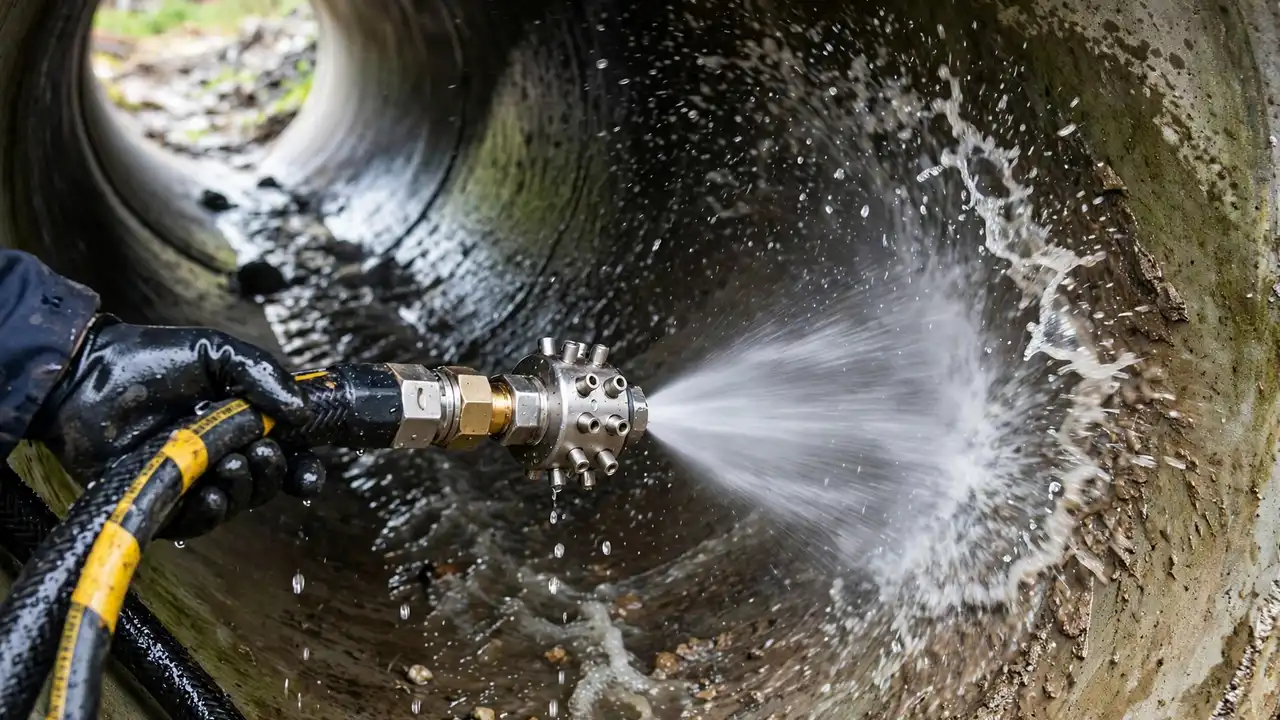
In short: When a sewer line slows down or backs up, the fix usually involves cleaning the line — but cleaning is not one single procedure. The two workhorses of the trade are cable cleaning, where a spinning steel cable with a cutting head clears the blockage, and hydro jetting, where high-pressure water scours the pipe's interior.
When a sewer line slows down or backs up, the fix usually involves cleaning the line — but cleaning is not one single procedure. The two workhorses of the trade are cable cleaning, where a spinning steel cable with a cutting head clears the blockage, and hydro jetting, where high-pressure water scours the pipe's interior. Both clear lines, and both have jobs where they are clearly the better choice.
Choosing wrong costs either money or pipe life: jetting a line with a collapsed section wastes the visit, while cabling a grease-choked line leaves the grease behind to cause the next backup. This guide explains how each method works, which problems each one handles well, and how a technician decides between them for the clay tile and cast-iron laterals common in Cerritos — so that when you call (833) 713-2101, you know what to ask for and why.
What traditional cable cleaning does
Cable cleaning, sometimes called snaking or rodding, is the older and more familiar method. A flexible steel cable feeds into the line from the cleanout, and its rotating cutting head chews through the blockage — root masses, tangled wipes, compacted paper — while the technician works it back and forth through the trouble spot. Different heads suit different jobs: a spear head punches through a solid blockage, a root saw grinds through root intrusions at clay tile joints, and a retriever can pull back objects that should never have been flushed.
The method's strength is mechanical cutting power at a targeted spot. When a Cerritos lateral is blocked by roots at two or three clay joints, a root saw on a cable opens the line quickly and restores flow the same visit. Its weakness is what it leaves behind: the cable punches a path through the blockage but does not wash the pipe walls, so grease films, fine root hairs, and scale remain to start the next clog. Cable cleaning restores flow; it does not restore the pipe's full diameter.
How hydro jetting works
Hydro jetting replaces the cutting head with water. A hose with a specialized nozzle feeds into the line, and a pump delivers water at pressures high enough to cut grease and blast debris off the pipe walls. The nozzle's rear-facing jets pull the hose forward through the line while the forward jet breaks up the blockage ahead, and the result is a pipe scoured close to its original diameter — grease, sludge, fine roots, and scale washed downstream to the city main.
The difference shows up on the camera afterward. A cabled line shows a cleared path through the blockage with residue still coating the walls; a jetted line shows clean pipe wall in the round. That thoroughness is why jetting is the go-to for grease-choked kitchen lines and for cast-iron laterals narrowed by decades of scale, both common in Cerritos' older tracts. The trade-off is that jetting needs an intact pipe: blasting high-pressure water into a collapsed or badly cracked section can push debris into the surrounding soil and make the damage worse.
Grease, roots, and scale: matching the method to the problem
Grease is hydro jetting's home turf. Kitchen lines and laterals serving homes where cooking grease goes down the drain develop thick, waxy coatings that a cable merely pokes through — the hole closes behind the head within weeks. Jetting melts and strips that coating along the whole run, which is why restaurants jet on schedules and why a grease-plagued residential lateral stays clear far longer after jetting than after cabling. If your backups trace to the kitchen side of the house, ask about jetting first.
Roots are more nuanced. A cable with a root saw cuts the intrusion fast and cheaply, which makes it the right first move for a sudden root blockage. But cutting leaves the joint open and the fine root hairs behind, so the roots grow back — often within a season or two for aggressive species like ficus. Jetting with a root-cutting nozzle clears more completely, yet neither method seals the joint the roots entered through. For recurring root trouble at the same clay joints, the lasting answer is usually root removal followed by a plan to seal or line those joints, not a lifetime of cleanings. Scale in cast iron is usually handled with jetting or specialty descaling heads, since a standard cable head rides over the rough interior without removing it.
When cleaning is not enough
Cleaning, by either method, treats the symptom inside the pipe. It cannot fix the pipe itself. A belly that holds standing water will refill with sediment no matter how thoroughly it is jetted; a separated joint will keep catching debris; a collapsed section will block the cable and stop the jetter hose cold. When the same line needs cleaning every few months, the pattern is telling you the pipe has a structural problem, not a maintenance problem — and the next step is a camera inspection to see which one.
This is the decision point where honest technicians change the conversation. If footage shows a cracked tile section letting in roots, the options become a sectional repair or lining that section; if it shows a fully collapsed run under the driveway, cleaning is off the table entirely. A company that keeps selling cleanings for a line the camera shows is broken is selling you the wrong service. Ask to see the footage after every cleaning so you can watch whether the underlying condition is stable or deteriorating.
Keeping the line clear after the visit
Whichever method clears your line, what happens next determines how long it stays clear. Keep grease out of the drains — wipe pans with a paper towel before washing, and never pour fryer oil down the sink — since grease rebuilds that coating on a freshly jetted line sooner than any other habit. Flush only toilet paper; wipes labeled flushable do not break down fast enough for older clay and cast-iron laterals and are a leading cause of repeat blockages in Cerritos tracts.
For lines with a history of root intrusion, schedule the next camera check before the next backup, not after. Many homeowners with mature trees over the lateral settle into a rhythm: a cleaning or jetting on a set interval, with camera verification every couple of cycles to confirm the joints are not worsening. And after the region's big winter storms, pay attention — saturated LA basin soils shift pipes and drive root growth, so a line that was fine in fall can be a problem by spring. A quick call to (833) 713-2101 at the first sign of slow drains beats an emergency backup every time.
Frequently Asked Questions
Will hydro jetting damage old clay or cast-iron pipes?
On structurally sound pipe, no — technicians adjust pressure to the pipe's material and condition, and they camera-inspect first to rule out collapses or severe cracks. Jetting is not used on pipe that is already broken, which is why the inspection comes before the jetter.
How often should a sewer line be cleaned?
A healthy line may never need scheduled cleaning. Lines with root-prone clay joints or heavy grease often settle into a regular interval, sometimes yearly. The right cadence comes from your camera footage and blockage history, not from a generic schedule.
Can I rent a drain snake and do this myself?
Small hand snakes can clear a single slow sink or tub, but sewer laterals need professional-grade cable machines or jetters, plus the camera to verify the result. DIY attempts on a main line often push the blockage deeper or damage old pipe without solving the cause.
Why does my line clog again so soon after snaking?
Because snaking opens a path without removing the underlying buildup or sealing the entry point. Grease re-coats quickly, root hairs regrow, and scale remains. If clogs return within months, ask for a camera inspection to find the structural reason instead of another blind cleaning.
Is hydro jetting safe for homes on slab foundations?
Yes, when the pipe is intact. The work happens entirely inside the pipe through the cleanout, so the slab is never disturbed. The pre-jet camera inspection is what confirms the under-slab section can handle the pressure safely.
Related reading
Sewer Line Easements Explained for Cerritos Homeowners
Easements and your sewer line rights.
Learn moreSewer Line Installation Process Explained for Cerritos Homes
New sewer line installation, start to finish.
Learn moreSewer Line Maintenance Tips for Cerritos Homeowners
Habits that keep sewers flowing.
Learn moreSewer Line Problems Don’t Wait. Neither Should You.
Call now and reach a local sewer line specialist serving Cerritos, CA and nearby northwest suburbs — 24/7.
(833) 713-2101Free to call · No obligation · 24/7 emergency line