
Sewer Backup Insurance Coverage, Explained
Most standard homeowners policies exclude sewer backup damage. What the exclusion means, what endorsements cover, and the documentation that strengthens a claim.
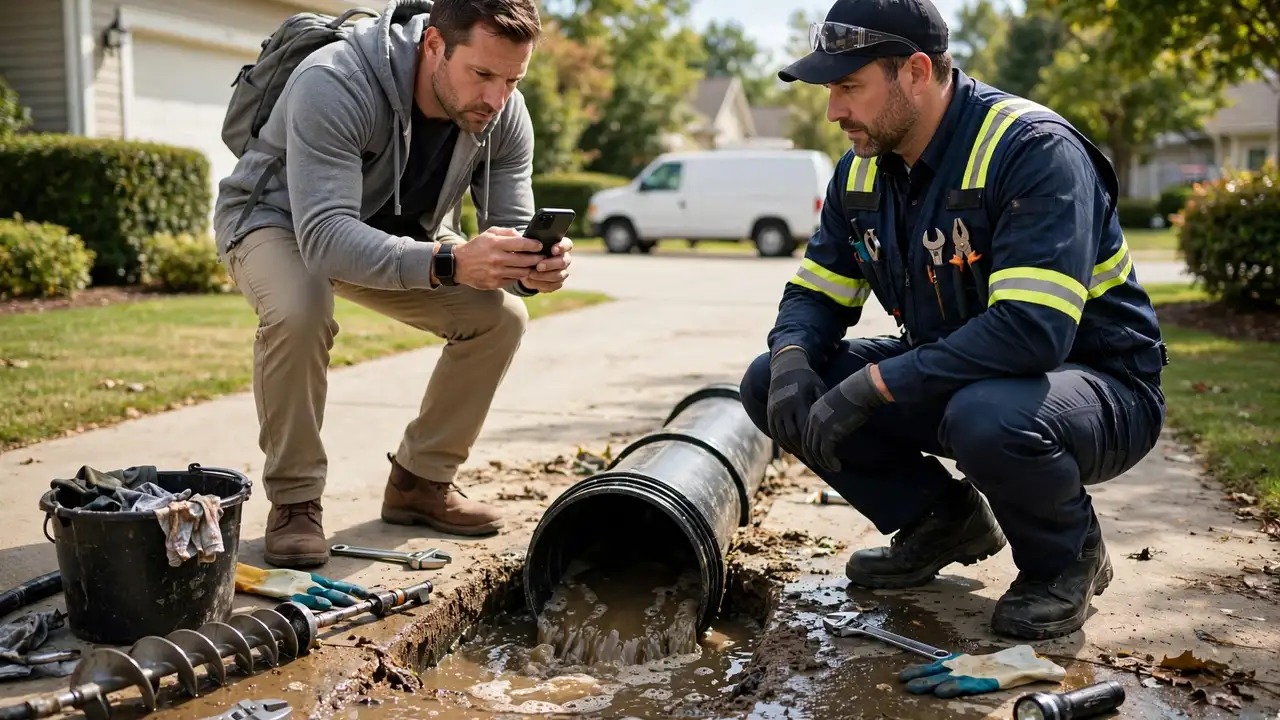
In short: After the crew leaves and the line is flowing again, a second question surfaces: who pays for the ruined flooring, the damaged drywall, the cleanup? Many Cerritos homeowners discover at this moment — the worst possible moment — that their standard homeowners policy excludes damage from sewer backup. The exclusion is common, the surprise is
After the crew leaves and the line is flowing again, a second question surfaces: who pays for the ruined flooring, the damaged drywall, the cleanup? Many Cerritos homeowners discover at this moment — the worst possible moment — that their standard homeowners policy excludes damage from sewer backup. The exclusion is common, the surprise is common, and both are avoidable with the right endorsement purchased before anything happens.
This guide explains how sewer backup coverage works: what standard policies exclude, what a water or sewer backup endorsement typically adds, and the documentation habits that make a claim go smoothly. It is educational, not insurance advice — policy language varies by carrier, so verify everything against your own declarations page. For the repair side of the equation, see our emergency sewer repair guide.
The standard exclusion: what 'water damage' doesn't cover
Homeowners policies do cover many kinds of water damage — a burst supply pipe inside the wall, rain entering through a wind-damaged roof — but they draw a hard line at water that backs up through sewers or drains. The standard exclusion typically bars coverage for damage caused by water backing up from a sewer, drain, or sump, regardless of what caused the backup. A root-choked clay lateral, a grease dam, infiltration during an atmospheric-river storm: the cause can be anything, and the exclusion still applies.
Insurers exclude it for a structural reason, not a personal one. Sewer backups are correlated risk: when a big storm saturates the LA basin, hundreds of old laterals can back up in the same week, which is exactly the kind of clustered loss insurers price out of the base policy. The exclusion is not a judgment on your maintenance — it is underwriting math. Knowing this before a loss is what lets you buy the endorsement that fills the gap.
The backup endorsement: what it typically adds
The water or sewer backup endorsement — sometimes called backup of sewers and drains coverage — is an optional add-on that covers damage to your property from water backing up through sewers, drains, or related systems. It generally applies to the consequences inside the home: ruined flooring and drywall, damaged personal property, the cost of cleanup and disinfection. Endorsements carry their own coverage sublimit, separate from the dwelling limit, so read the declarations page to know where that ceiling sits.
Two limitations surprise people. First, the endorsement typically covers the resulting damage, not the repair of the failed pipe itself — clearing roots or replacing the lateral is usually still the owner's expense. Second, it does not cover flooding from outside the home; overland floodwater is a separate peril handled by flood insurance, not by a backup endorsement. If your property sits in a low spot that ponds during storms, understand which peril each policy addresses before you need either.
What insurers want to see: documentation
Claims go smoothly when the paper trail is complete, and a sewer backup gives you a short list of evidence to gather. Photograph and video the damage at discovery — before cleanup, if it is safe — showing water lines on walls, affected flooring, and damaged belongings. Keep every invoice: the emergency sewer line cleaning or repair bill, the water-damage remediation invoice, receipts for anything you replace. If the technician recorded camera footage showing the cause — root masses, a collapsed section — keep a copy; it establishes that the loss came from the lateral and not from negligence.
Maintenance records help too. An insurer reviewing a backup claim looks more favorably on a homeowner who can show periodic inspections and cleanings than on one with no history at all — it supports the story that the backup was sudden and accidental rather than the result of years of neglect. This is one more reason to keep the footage and service reports from every visit in a single file, the way commercial properties already do.
Steps to take when a backup happens
Mitigate first. Stop using water — every fixture you run adds to the backup — and keep the household out of the affected area. Then document: photos and video before anything is moved or cleaned, a written note of the date, time, and what you observed. Call for emergency service to stop the flow and clear the line; the service invoice becomes part of your claim file. Notify your insurer promptly — most policies require timely reporting, and waiting weeks weakens any claim.
Do not discard damaged flooring, drywall, or belongings before the adjuster has seen them; photograph everything, then ask the adjuster what can go. If you pay for emergency remediation out of pocket before approval, keep itemized receipts — reasonable emergency measures are generally reimbursable, but undocumented spending invites disputes. And get the cause in writing: a service report stating what the camera showed (roots, collapse, grease) connects the damage to a covered peril under your endorsement.
Renters, landlords, and condos: who covers what
Coverage splits along ownership lines. A renter's policy covers the tenant's belongings — and renters can usually add a backup endorsement to it — but not the structure; the landlord's policy covers the building itself, including damage to floors and walls from a backup, if the landlord carries the endorsement. When a backup damages both, two claims may run in parallel, which is why landlords and tenants should each know what their own policy includes before a loss forces the question.
Condos add a third layer. The HOA's master policy typically covers common areas and sometimes the original structure, while the unit owner's HO-6 policy covers interior finishes and belongings — and the lateral serving a single unit may be the owner's responsibility while shared lines belong to the association. A camera inspection that maps which line serves which unit settles these questions with evidence instead of arguments. Whatever your situation, the principle is the same: read the policy before the backup, not after.
Frequently Asked Questions
Does my standard homeowners policy cover sewer backup?
Usually not. Most standard policies exclude damage from water backing up through sewers or drains. Coverage typically requires an optional water or sewer backup endorsement added before the loss. Check your declarations page — the exclusion and any endorsement will be spelled out there.
Will the endorsement pay to fix the broken pipe itself?
Typically no. The backup endorsement covers the resulting damage inside the home — flooring, drywall, belongings, cleanup — not the repair or replacement of the failed lateral. Fixing the pipe is generally the owner's expense, which is a separate budgeting question from the insurance claim.
What if the backup came from the city main, not my lateral?
That is a different situation: damage from a city main failure may support a claim against the municipality rather than your homeowner's policy. You will still need documentation — photos, service reports, and camera footage locating the problem — so gather the same evidence either way.
How should I document a backup for a claim?
Photograph and video everything before cleanup, keep damaged materials until the adjuster sees them, save every invoice and receipt, and keep the technician's camera footage and written service report showing the cause. Report the claim promptly; most policies require timely notice.
Can I add the endorsement after a backup happens?
You can add it at any time, but it will not cover a loss that already occurred — insurance covers future risk, not past damage. The right time to add it is before you need it, especially if your lateral is older clay or cast iron with a history of root intrusion.
Related reading
Sewer Camera Inspection: What to Expect in Cerritos, CA
Inside a camera inspection, step by step.
Learn moreSewer Gas Smell: Health Effects and Causes in Cerritos Homes
Sewer gas smells: causes and health risks.
Learn moreSewer Leak Detection Methods Compared
Acoustic vs. camera leak detection.
Learn moreSewer Line Problems Don’t Wait. Neither Should You.
Call now and reach a local sewer line specialist serving Cerritos, CA and nearby northwest suburbs — 24/7.
(833) 713-2101Free to call · No obligation · 24/7 emergency line