
What to Do During a Sewer Backup Emergency
Wastewater backing into your home is a health hazard, not just a mess. The exact steps to take — and the mistakes to avoid — in the first minutes of a sewer backup.
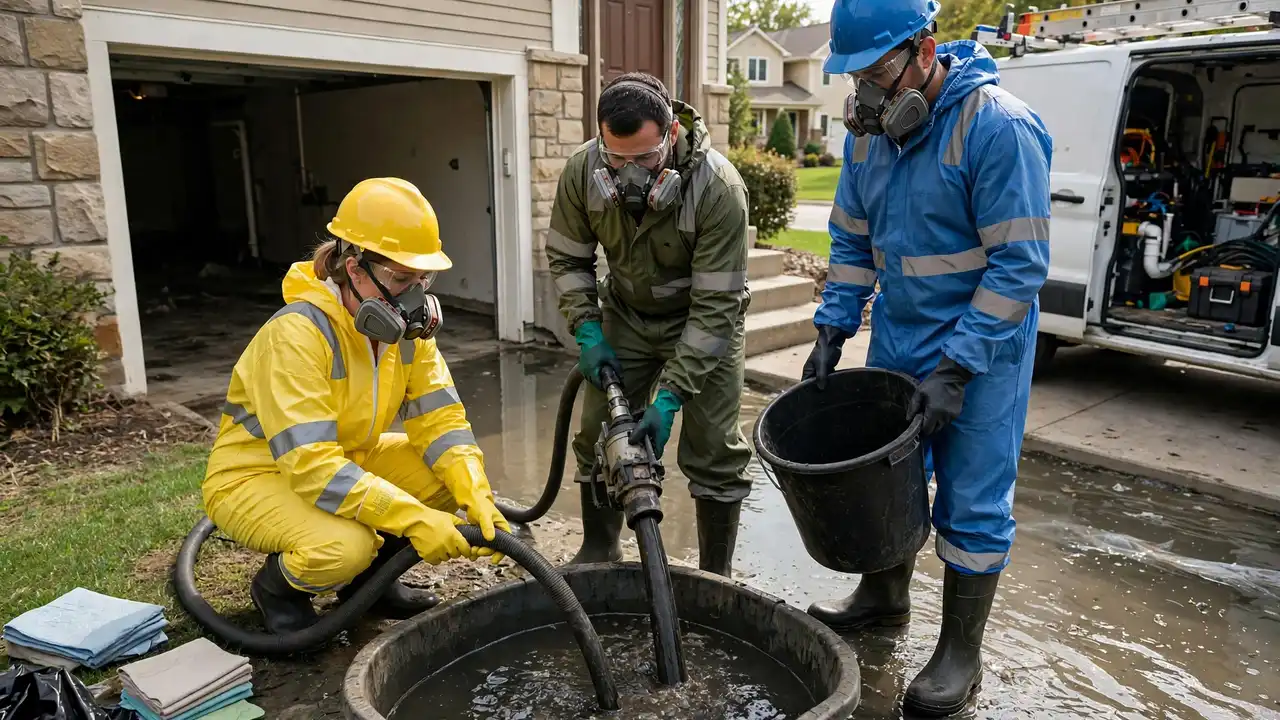
In short: Few household emergencies feel as violating as a sewer backup: wastewater rising in a tub, a shower, or a floor drain, carrying everything the word implies into your living space. Panic is understandable — but the first minutes matter enormously, because the right actions limit both the health risk and the damage, while the wrong
Few household emergencies feel as violating as a sewer backup: wastewater rising in a tub, a shower, or a floor drain, carrying everything the word implies into your living space. Panic is understandable — but the first minutes matter enormously, because the right actions limit both the health risk and the damage, while the wrong ones make both worse. This guide is the calm, ordered sequence to follow when sewage is coming up instead of going down.
Two principles govern everything below: sewage is a biological hazard, not just dirty water, and the backup will continue as long as water keeps entering the system. Every step follows from those two facts. Read this now, before you need it — and if you are reading it mid-emergency, start at step one and call (833) 713-2101 for emergency sewer service as soon as it is safe to do so.
Step 1: Stop adding water
The single most effective thing you can do is stop sending water into the system. Do not flush toilets, run faucets, start the dishwasher or washing machine, or take a shower. Every gallon you add upstream becomes another gallon looking for the lowest exit — which right now is inside your home. Tell everyone in the house immediately, including anyone who might reflexively run a tap.
If the backup is severe or you cannot account for automatic water users — an irrigation timer, a running washing machine — shut off the home's main water valve. It is usually near the front of the house or in the garage in Cerritos slab homes. Stopping the inflow does not fix the blockage, but it freezes the situation and prevents a bad backup from becoming a catastrophic one.
Step 2: Protect people and pets
Sewage carries bacteria, viruses, and parasites — treat any area it has touched as contaminated. Keep children, pets, and anyone with a compromised immune system completely away from affected rooms. If you must enter the area, wear rubber boots and gloves, and avoid touching your face. Open windows for ventilation if weather allows; sewer gas in enclosed spaces is unpleasant and, in concentration, unhealthy.
Be alert to electrical hazards, the most dangerous secondary risk in a backup. If water has reached outlets, power strips, or appliances, do not step into the water — shut off the affected circuit at the breaker panel if you can do so without entering the water, and treat any submerged electrical equipment as live until proven otherwise. When in doubt, wait for professionals.
Step 3: Do not make it worse — common mistakes
The instinct to fix it yourself is strong, and in a backup it is usually wrong. Do not pour chemical drain cleaners into a backed-up system: they will not clear a main-line blockage, they create a caustic soup that endangers anyone who later works on the line, and they can damage pipes. Do not keep plunging a sewer backup either — plunging pressurizes the system and can force sewage up through other fixtures or out of weak joints.
Do not run a rented drain snake blindly into the main line. Without a camera, you cannot see what you are dealing with — a collapsed section, a severe root mass, or a belly full of standing water — and aggressive cabling can damage already-fragile pipe or get the cable stuck. And resist the urge to start tearing out wet drywall or carpet yourself before the situation is assessed; disturbing contaminated materials without proper protection spreads the hazard. The right move after stabilizing is professional clearing with camera verification, so the actual cause is identified, not just the symptom.
Step 4: Document and call for help
Once the inflow is stopped and people are safe, document everything. Photograph the affected areas, the fixtures involved, and any visible damage — these records matter for insurance claims, and most policies distinguish between sudden backup events and long-term neglect. Note the time the backup started and which fixtures were in use; that pattern helps the technician diagnose faster.
Then call for emergency service: (833) 713-2101. Describe what you see — which fixtures are backing up, whether it is still rising, and whether you have stopped water use. A professional response starts with stopping the immediate crisis: clearing the blockage to restore flow, then running a camera to find out why it happened. Knowing the cause — roots, grease, a collapsed section — is what prevents the next emergency.
After the backup: cleanup and prevention
Cleanup of sewage contamination is not a mop-and-bucket job. Porous materials that absorbed wastewater — carpet padding, soaked drywall, upholstered items — generally cannot be disinfected and should be removed. Hard surfaces need thorough cleaning followed by disinfection with an appropriate sanitizer. Many homeowners use a professional restoration service for this phase, and your insurance carrier may require or recommend it.
Once the immediate crisis is past, invest in the lesson. A backup is your sewer line's loudest possible warning, and the camera footage from the emergency visit usually shows exactly what caused it. Whether the answer is scheduled root management, a follow-up inspection program, lining a damaged section, or replacing a failing run, acting on the diagnosis now is what keeps the next atmospheric-river storm or spring root season from repeating the experience.
Frequently Asked Questions
Is a sewer backup an emergency or can it wait until morning?
Treat any backup involving wastewater inside the home as urgent. Sewage is a biological hazard, and the damage compounds as long as water keeps entering the system. At minimum, stop all water use immediately and call for guidance — a professional can advise whether the situation is stable enough to schedule or needs immediate response.
Can I use the toilets in another bathroom during a backup?
You should not. All drains in the house feed the same lateral, so water used anywhere adds to the backup. Stop all water use throughout the home until the blockage is cleared.
Will my homeowners insurance cover the damage?
Many policies include limited coverage for sewer backup, but it is often an endorsement rather than standard coverage, and policies distinguish sudden events from long-term neglect. Document everything with photos and contact your carrier promptly. The pipe repair itself is frequently excluded even when resulting damage is covered.
Why does my sewer back up during heavy rain?
Intense rain can drive groundwater into cracked laterals through infiltration, overwhelming the pipe's capacity, or raise the level in the municipal main so flow has nowhere to go. If backups correlate with storms, the camera inspection should focus on cracks, infiltration points, and whether a backwater valve is appropriate for your home.
How do I prevent this from happening again?
Act on the diagnosis. The emergency visit's camera footage shows the cause — recurring roots, grease buildup, a structural defect — and each has a preventive answer: scheduled cleaning, changed drain habits, lining, or replacement. A backup that gets a follow-up plan is an incident; one that does not is a preview.
Sewer Line Problems Don’t Wait. Neither Should You.
Call now and reach a local sewer line specialist serving Cerritos, CA and nearby northwest suburbs — 24/7.
(833) 713-2101Free to call · No obligation · 24/7 emergency line