
Pipe Lining vs. Pipe Bursting: A Head-to-Head Guide
Lining preserves the old pipe with a new interior; bursting destroys it and pulls in new pipe. How to match the method to your line's condition.
In short: Trenchless sewer repair in Cerritos comes down to two methods, and homeowners often hear them presented as rivals. Pipe lining (CIPP) builds a new pipe inside the old one; pipe bursting breaks the old pipe apart and pulls a new one through the same path. Both avoid the open trench across your yard — but
Trenchless sewer repair in Cerritos comes down to two methods, and homeowners often hear them presented as rivals. Pipe lining (CIPP) builds a new pipe inside the old one; pipe bursting breaks the old pipe apart and pulls a new one through the same path. Both avoid the open trench across your yard — but they solve different problems, and choosing the wrong one wastes money — or fails outright.
This guide compares the two methods head to head: what each one does, what condition each one requires from the old pipe, and how they differ on diameter, roots, soil, and the structures above the line. The decision always starts from the same place — camera footage of your actual lateral. If you already have footage, call (833) 713-2101 and we will help you read it.
The core difference: preserve vs. replace
Pipe lining is preservation. The old pipe stays in the ground and becomes the mold for a new epoxy interior: a resin-soaked liner is installed, cured, and left as a jointless pipe-within-a-pipe. The clay tile or cast iron is still out there holding the soil back; the liner simply gives it a new working surface. Think of it as resurfacing a road rather than rebuilding it — faster, less invasive, and entirely dependent on the roadbed still being sound.
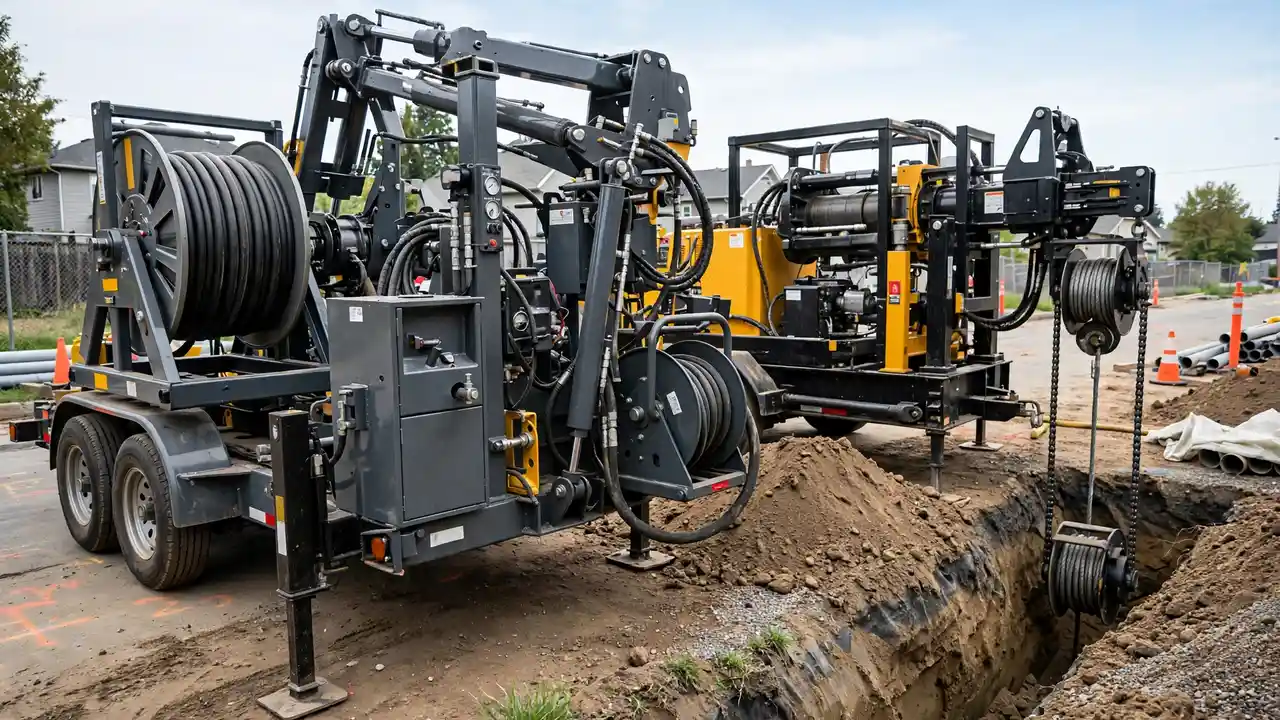
Pipe bursting is replacement. The old pipe is demolished in place — fractured outward into the soil — and a new HDPE pipe takes its path in the same operation. Nothing of the old pipe remains except fragments pressed into the bore wall. Think of it as demolishing a building and constructing new on the same footprint: more thorough, more disruptive below ground, and the only option when the existing structure cannot be saved. Our pipe lining guide walks through the lining process step by step.
What each method needs from the old pipe
Lining is the pickier of the two. It needs a host pipe that still holds its shape: round, continuous, without collapses, severe offsets, or bellies full of standing water. Root intrusion at clay joints, internal scale in cast iron, minor cracks — all fine, because the liner bridges and seals them. But a liner follows the old pipe's geometry, so it inherits every belly and offset. The qualifying camera inspection is really a geometry test, and lines fail it more often than homeowners expect.
Bursting asks less of the old pipe and more of the ground around it. Collapsed sections, channeled inverts, destroyed joints — none of these disqualify bursting, because the head does not need a host, only a path for the cable. What bursting cannot do is fix grade: a belly in the old line becomes a belly in the new line, since the head tracks the existing path. And bursting needs cooperation from the surroundings — no parallel utilities too close, no structures that soil displacement would disturb. When neither method fits, open-cut replacement of the problem section is the honest answer.
Diameter, flow, and the upsizing question
Here the methods diverge sharply. Lining slightly reduces the inside diameter — the liner has thickness — but the smooth epoxy surface usually more than compensates in flow: a lined four-inch line typically drains better than the scaled, rough pipe it replaced. For most residential laterals, the diameter question ends there. Lining cannot, however, make a pipe bigger, and if the original line was undersized, lining locks in that limitation.
Bursting can upsize. Because the bursting head is sized independently of the old pipe, a four-inch clay lateral can emerge as six-inch HDPE — genuinely more capacity, not just smoother walls. Upsizing matters in specific situations: an original line that was marginal for the home's fixture count, a past addition that added bathrooms, or a commercial lateral that needs to meet current demand. If capacity is the problem, bursting (or open cut) is the answer; lining a too-small pipe just gives you a smoother too-small pipe.
Roots, soil, and what's above the line
Both methods defeat roots permanently, and by the same mechanism: they eliminate joints. Lining covers every joint with a continuous epoxy surface; bursting replaces jointed pipe with fused, jointless HDPE. A lined or burst lateral has no seams left for ficus or eucalyptus roots to exploit — which is why either method, properly done, ends the cycle of annual root cuttings that plagues old clay laterals in Cerritos.
The difference underground is displacement. Lining displaces nothing — the liner goes inside the existing pipe, so nearby gas, water, and electric lines never feel a thing. Bursting fractures the old pipe outward and compacts soil around the new one, which is normally harmless but demands care where utilities run parallel and close. Above ground, both are gentle compared with open cut: lining often needs a single access point, bursting needs two pits. Neither tears up the driveway between them. Compare both against open trench in our trenchless sewer repair overview.
How to choose: a practical decision path
Start with the footage, always. If the camera shows a pipe that is round and continuous — roots at the joints, scale on the walls, cracks but no collapse — lining is usually the fitting choice: less excavation, less displacement, and a new jointless interior that addresses exactly what is wrong. If the footage shows collapse, severe offsets, a channeled invert, or an undersized line that needs more capacity, bursting is the fitting choice: it replaces rather than preserves.
The gray zone is real: a line with one collapsed section and an otherwise sound run, or a borderline belly. In these cases, ask for both options quoted against the same footage, and ask the contractor to point at the screen and explain why each method fits or does not. A contractor who can only sell one method will recommend that method for every line; a contractor comfortable with both will show you the footage and let the pipe decide. That is the conversation worth having before anyone signs anything.
Frequently Asked Questions
Which lasts longer — a lined pipe or a burst replacement?
Both are long-term solutions when matched to the right pipe. A properly cured epoxy liner is rated for decades of service, and a new HDPE pipe installed by bursting is a brand-new pipe with a comparable design life. The difference is not longevity in the abstract — it is whether the old pipe was a suitable candidate for lining in the first place.
Which method is less disruptive to my property?
Lining, usually. It often needs only a single access point — sometimes just an existing cleanout — and displaces no soil. Bursting needs two pits and displaces soil outward, which requires utility locating and care around parallel lines. Both are dramatically less disruptive than an open trench across the yard.
Can tree roots get through either a liner or a burst pipe?
Properly installed, no. Both methods leave a jointless barrier — cured epoxy or fused HDPE — with no seams for roots to enter. That is the fundamental advantage over the original jointed clay or cast iron. Roots can still exploit a bad branch connection or a damaged section, which is why the final camera inspection matters for both methods.
My pipe has collapsed. Can it still be lined?
No. Lining needs a host pipe that holds its shape; a collapsed section cannot support the liner during installation and curing. A collapsed line is a bursting or open-cut case — bursting if the cable can still be threaded through, open cut if the geometry is too far gone or the grade needs correcting.
Can I choose bursting just to get a bigger pipe?
Upsizing is possible with bursting, but it should be justified — an undersized original, added bathrooms, or commercial demand — not done by default. A larger pipe also needs proper slope and a main connection that accepts it. Discuss the capacity question against your camera footage rather than assuming bigger is automatically better.
Related reading
Sewer Backup Insurance Coverage Guide
Does insurance cover sewer backups?
Learn moreSewer Camera Inspection: What to Expect in Cerritos, CA
Inside a camera inspection, step by step.
Learn moreSewer Gas Smell: Health Effects and Causes in Cerritos Homes
Sewer gas smells: causes and health risks.
Learn moreSewer Line Problems Don’t Wait. Neither Should You.
Call now and reach a local sewer line specialist serving Cerritos, CA and nearby northwest suburbs — 24/7.
(833) 713-2101Free to call · No obligation · 24/7 emergency line